IRIDEX
Company   Investors   Events   News   Careers   Search
Sales: 
Support: (800) 388-4747
  • Home
  • Products
    • Lasers
      • IQ 532™
      • IQ 577™
      • IQ 810™
      • Additional Lasers
    • Delivery Devices
    • Retina Consumables
      • EndoProbe Handpieces
      • Consumables
      • DioPexy™ Probe
    • Glaucoma Consumables
    • Veterinary
    • ENT
  • MicroPulse™
  • Physician Education
    • Glaucoma
      • TSCPC G-Probe
      • Trabeculoplasty (MLT)
    • Retina
      • Central Serous Chorioretinopathy
      • Diabetic Macular Edema
      • ME due to RVOs
      • Vitreoretinal Surgery
    • Clinical Library
  • Patient Education
    • Treat My DME
    • Treat My Glaucoma
  • Contact
    • Contact Us
    • Ask A Question
    • Schedule A Demo
    • Request A Quote
    • Order EndoProbe®
    • International Distributors
HOME > Physician Education > Glaucoma > TSCPC G-Probe

Physician Education

Learn how to perform transscleral cyclophotocoagulation (TSCPC) with the G-Probe glaucoma device

  • Solutions
  • Treatment Parameters
  • Videos
  • Clinical
  • Testimonials
IQ810 Laser

IQ 810™ Laser System

Infrared console that offers high performance for retinal photocoagulation and glaucoma procedures, including transscleral applications.


gprobe

G-Probe™ Glaucoma Device

Transscleral cyclophotocoagulation (TSCPC) using the G-Probe glaucoma device is a long-term, effective intraocular pressure lowering procedure for many types of glaucoma patients. Patients with refractory glaucoma and those with good visual acuity can benefit from TSCPC using the G-Probe.


Schedule Demo


Treatment Parameters
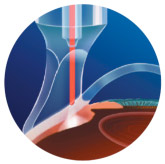
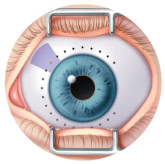
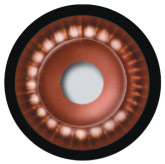
G-Probe treatment   G-Probe placement   G-Probe application

Placement

Hold the G-Probe™ parallel to the visual axis with the shorter edge of the footplate firmly between the anterior border and the middle of the limbus. Laser delivery is transscleral.


Application

Successive applications are spaced one-half the width of the G-Probe footplate apart by aligning a side of the probe over the indented center of the adjacent application.


Treatment

Administer 18-21 laser applications per treatment session over 270° (three quadrants, six or seven applications per quadrant), usually omitting the temporal quadrant.

G-Probe treatment parameters are suggested by IRIDEX and are based on recommendations by experienced clinicians. Ultimately, it is the physician’s responsibility to determine appropriate treatment parameters for each case.

Iris Color

Power

Duration

Energy per Application

Dark Brown
1250 mW
4000 ms 5.00 joules
All other
1500 mW
3500 ms
5.25 joules

This array of treatment parameters has been called the “slow coagulation” technique and has proven effective for most eyes.


pdf Download G-Probe Instructions For Use

Relooking at Transscleral Cyclophotocoagulation:
Old and New Thoughts

Iqbal Ahmed, MD
Nir Shoham Hazon, MD

Expanding Indications for TSCPC

Nathan Radcliffe, MD

This text will be replaced

Slow Coagulation Technique

Parameters for using the G-Probe glaucoma device.

This text will be replaced

TSCPC Surgery

Combination cataract TSCPC case using the G-Probe glaucoma device

This text will be replaced

What is TSCPC?

Reduction in aqueous humor formation by coagulating proteins in cells of the ciliary body and processes.

This text will be replaced

TSCPC Patient Selection

Selecting the right glaucoma patient for TSCPC


Revisiting TSCPC as an OptionOphthalmology Today

Procedure has ability to lower IOP, preserve vision similar to trabeculectomy and tube shunts

pdf Download Now


Transscleral cyclophotocoagulation effective as early glaucoma treatment

Although typically a last line of defense, the treatment has shown to be beneficial early in the glaucoma surgical treatment paradigm.
Parag Parekh, MD

pdf Download Now


Office-Based TSCPC With the Iridex G-Probe

This noninvasive procedure offers similar IOP-lowering efficacy as traditional glaucoma surgeries with an improved safety profile.

pdf Download Now


Diode Laser CyclophotocoagulationGlaucoma Today

Technique and results.

pdf Download Now


Reconsidering Transscleral CyclophotocoagulationGlaucoma Today

Leading glaucoma experts discuss the applications of TSCPC and share their personal experiences and opinions

pdf Download Now


The Benefits of Transscleral CyclophotocoagulationGlaucoma Today

This viable alternative to trabeculectomy should be considered in more moderate to severe glaucoma cases

pdf Download Now


Current Options for CyclophotocoaglationGlaucoma Today

An overview of transscleral diode photocoagulation and endocyclophotocoagulation

pdf Download Now

kammer

You can really consider TSCPC in almost all glaucoma situations, even malignant glaucoma. It is not just relegated to end-stage treatment anymore.

Dr. Jeffrey Kammer | Nashville, TN | Vanderbilt Eye Institute

kammer

TSCPC is a surgery that can be done before or after any other surgery. It is very versatile from that standpoint.

Dr. Nathan Radcliffe | New York, NY | Weill Cornell Medical College

kammer

Recovery with TSCPC is much more rapid and the postoperative care much less involved than with someone who has had an incisional glaucoma case in a surgical center.

Dr. Steven Vold | Springdale, AR | Vold Vision, PLLC

logo aa0 logo ags logo ascrs logo asrs logo esrs0 logo euretina

 Products

Lasers
Delivery Devices
Retina Consumables
Glaucoma Device

Resources

Physician Information
Patient Information
MicroPulse Forum
Clinical Library


About IRIDEX

Overview
News
Events
Contact Us

Company

Investors
Offices/Contact
Careers

twitter facebook linkedin youtuber
Copyright ©2003-2013 by IRIDEX Corporation
Terms Of Use | Privacy Statement